The article was published in Polish. Below is an English translation of its opening. Wersja polska
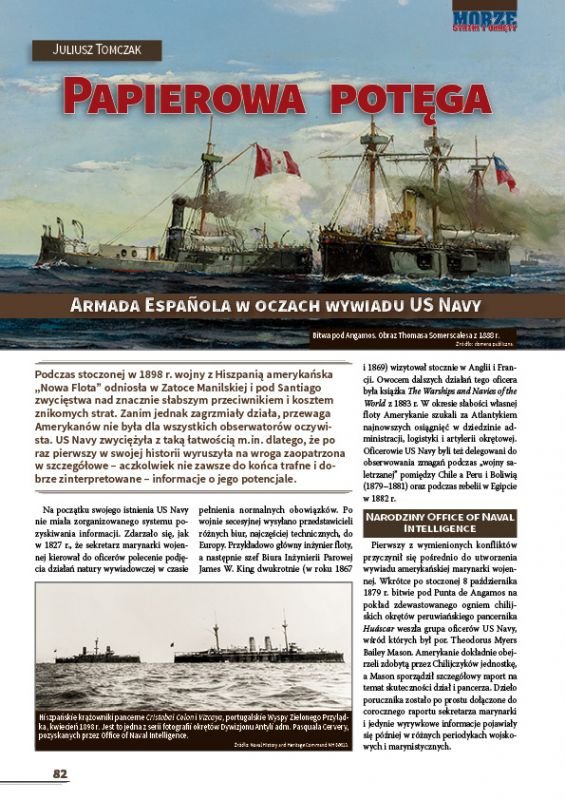
At the end of March 1898, an anonymous “officer from Havana” wrote in the official periodical of the United States armed forces: “War with Spain is war with a pygmy. (…) we would only have to up anchor, go to Cuba and take it at once without the loss of a ship or a man, for our forces here are so incomparably more powerful than theirs. (…)” He went on to ridicule as absurd any fear that the enemy could threaten American seaborne trade. His arguments mixed prejudice with a realistic assessment. He considered the Spaniards “people of another age”, but also made an otherwise accurate observation: “Spain has no base or colliers. She could attack us as easily as Cochin China.”
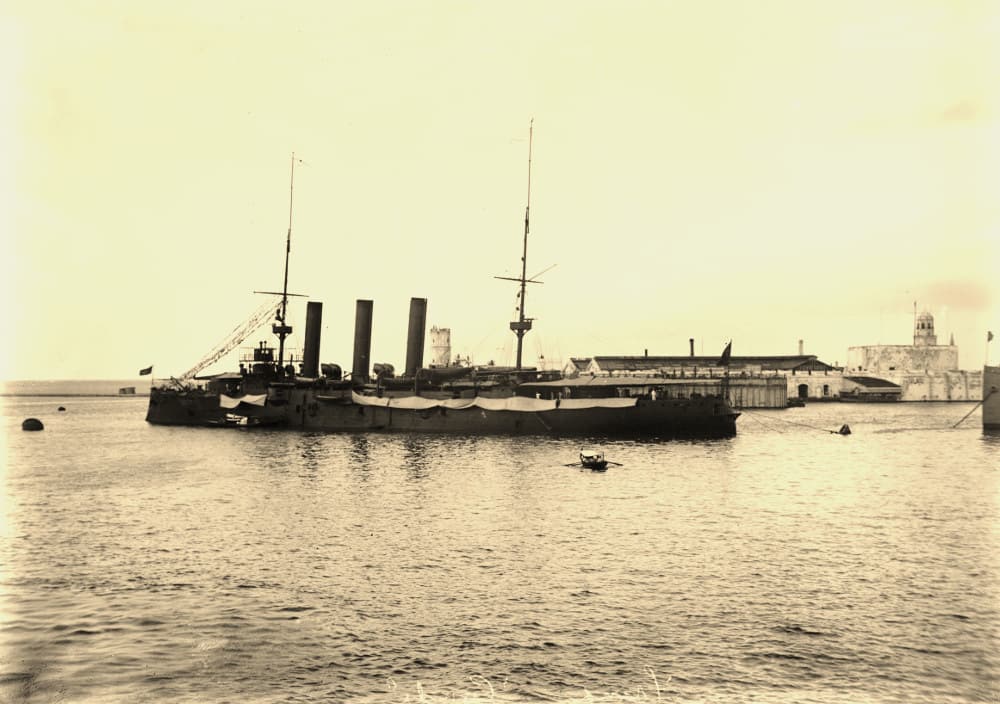
The US Navy’s intelligence service, the Office of Naval Intelligence (ONI), established in 1882, did not underestimate the enemy quite so much. Thanks to the work of naval attachés in Madrid and other European capitals, the Americans gained a fairly accurate – though, as later events showed, somewhat exaggerated – picture of the Spanish fleet’s potential. As a result, US naval planners assumed that with their armoured cruisers and destroyers the Spaniards were a dangerous opponent. The war of 1898 quickly revised that view.