The article was published in Polish. Below is an English translation of its opening. Wersja polska
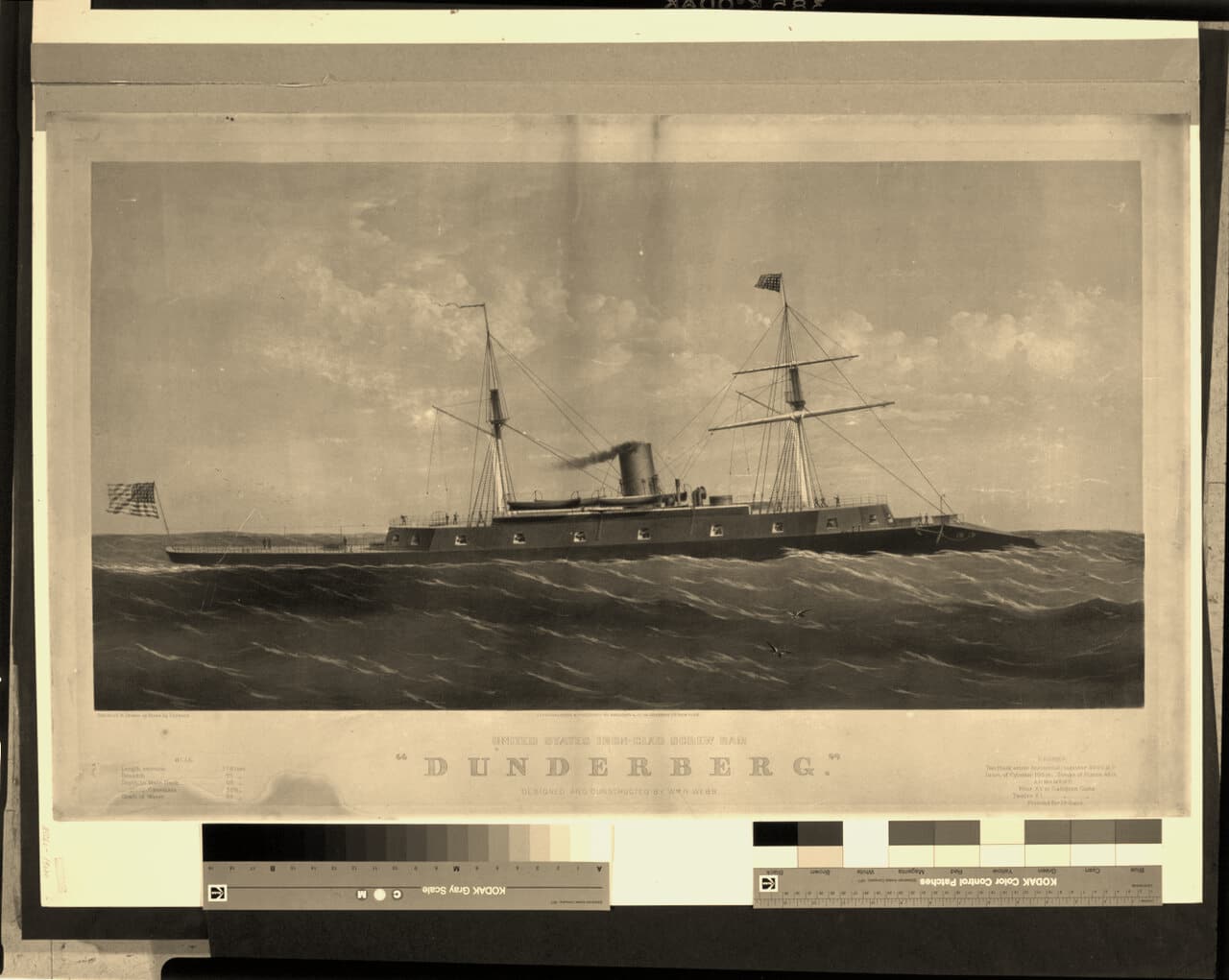
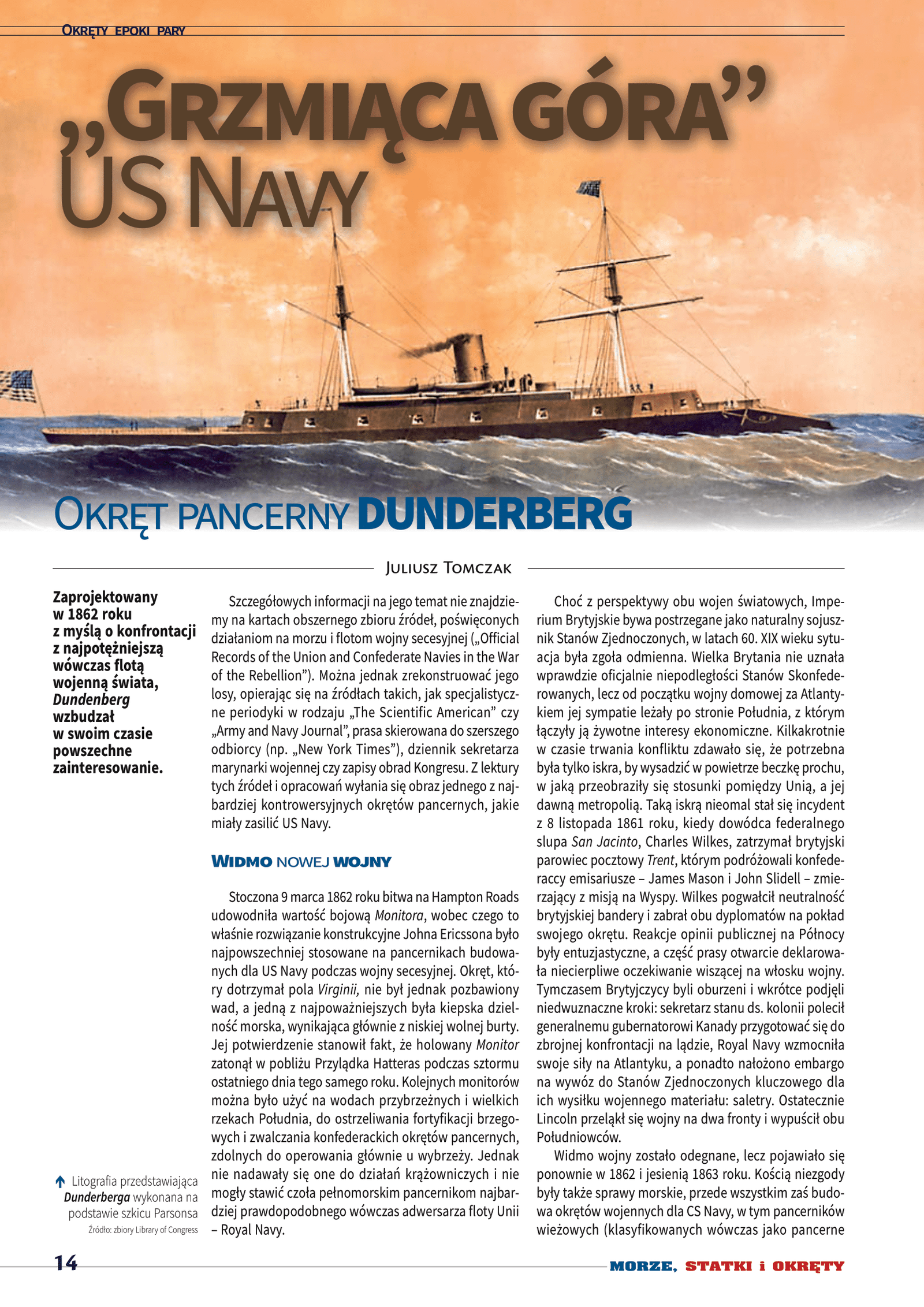
Designed in 1862 with a confrontation with the most powerful navy in the world in mind, Dunderberg attracted widespread interest in her day.
Detailed information about her cannot be found in the extensive collection of sources on the naval war and fleets of the Civil War (Official Records of the Union and Confederate Navies in the War of the Rebellion). Her story can nevertheless be reconstructed from sources such as specialist periodicals like Scientific American and the Army and Navy Journal, the popular press (e.g. the New York Times), the diary of the Secretary of the Navy and the records of Congress. These sources reveal one of the most controversial ironclads ever intended for the US Navy.
The Spectre of a New War
The Battle of Hampton Roads, fought on 9 March 1862, proved the fighting value of Monitor, and John Ericsson’s design was therefore the most widely used for ironclads built for the US Navy during the Civil War. The ship that had held her own against Virginia was not without flaws, however, and one of the most serious was her poor seaworthiness, mainly due to her low freeboard. This was confirmed when Monitor, under tow, sank off Cape Hatteras in a storm on the last day of the same year. Later monitors could be used in coastal waters and on the great rivers of the South, to bombard shore fortifications and fight Confederate ironclads that could operate mainly close to the coast. But they were unsuited to cruising and could not face the ocean-going ironclads of the Union navy’s most likely adversary at the time – the Royal Navy.